
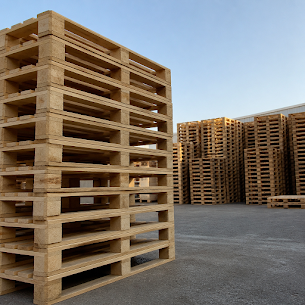
Choosing the right pallet is important when businesses need to store, move, and transport heavy products safely. The wrong pallet can bend, break, or become unstable under excessive weight, potentially causing product damage and handling problems. For warehouses, manufacturers, logistics companies, and exporters, selecting suitable industrial wooden pallets for heavy load capacity should be based on more than size or price.
In Dubai and across the UAE, businesses often handle machinery, construction materials, equipment, packaged goods, and other heavy products. Understanding pallet construction, load capacity, dimensions, wood quality, and handling requirements can help businesses select pallets that are appropriate for their specific operations.
Why Load Capacity Matters When Choosing Wooden Pallets
Every pallet has a practical weight limit, and that limit can vary depending on how the pallet is being used. A pallet supporting goods while sitting on a warehouse floor may handle a different load than one being lifted by a forklift or moved with a pallet jack.
Before purchasing pallets, businesses should determine the approximate weight of the goods they need to transport or store. The type of handling equipment and storage system should also be considered.
Selecting pallets according to the actual application helps reduce the risk of structural failure and improves load stability during handling.
What Are Industrial Wooden Pallets?
Industrial wooden pallets are platforms designed to support goods during storage, handling, and transportation. They are commonly used in warehouses, factories, distribution centers, logistics operations, and supply chains.
Wooden pallets remain popular because they can provide a practical combination of strength, usability, repairability, and cost-effectiveness. Their construction can also be adapted for different dimensions and load requirements.
For businesses in Dubai and other UAE locations, pallet selection should take into account the type of goods, transportation method, warehouse conditions, and expected frequency of use.
How to Determine the Required Pallet Load Capacity
The first step is to determine the weight of the products that will be placed on the pallet. Businesses should not estimate capacity based only on the total weight because load distribution also affects pallet performance.
A concentrated heavy load can place more stress on specific boards and joints than a properly distributed load. The way goods are stacked and secured should therefore be considered when selecting a pallet.
It is also useful to distinguish between static and dynamic applications. A pallet that remains stationary in storage may have different requirements from one that is regularly lifted and transported.
High Load Capacity Wooden Pallets: What Makes Them Strong?
Several construction factors contribute to the strength of high load capacity wooden pallets. These include the quality of the timber, board thickness, stringer or block configuration, nail or fastener placement, and overall pallet design.
A well-constructed pallet distributes weight across its supporting components rather than concentrating excessive pressure in one area. Strong joints and properly positioned boards can also improve stability during lifting and movement.
For heavy industrial applications, pallet construction should be matched to the expected load rather than relying on a standard pallet specification.
Key Features of Heavy Duty Industrial Wooden Pallets
Heavy duty industrial wooden pallets are designed for applications where standard lightweight pallets may not provide sufficient support. They generally require stronger construction and materials appropriate for heavier goods.
Important features can include reinforced deck boards, strong supporting members, suitable spacing, durable fasteners, and a design that allows safe forklift or pallet-jack handling.
Businesses should also consider whether the pallets will be reused. A reusable pallet may need to withstand repeated lifting, loading, unloading, and warehouse movement.
How Pallet Design Affects Heavy Load Performance
Pallet design has a direct effect on how weight is distributed. The arrangement and thickness of deck boards, the number and position of supporting members, and the overall dimensions can influence stability.
A pallet designed for a particular heavy product may perform better than a general-purpose pallet because its structure can be matched to the load.
For example, machinery or industrial components may require a customized configuration to ensure that the weight is properly supported across the pallet surface.
Choosing the Right Wood Quality for Industrial Pallets
Wood quality is another important consideration when selecting pallets for demanding applications. Timber should be appropriately selected and processed for the intended use, with attention given to defects that could affect structural performance.
Moisture, cracks, damaged boards, and weak joints can reduce the reliability of a pallet. Businesses should inspect pallets before use, particularly when they are expected to carry heavy goods.
For long-distance transportation and repeated handling, choosing appropriately constructed pallets can provide greater confidence in load support.
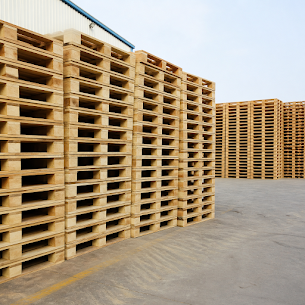
Pallet Dimensions and Their Impact on Load Stability
The pallet should be large enough to support the load without creating excessive overhang. Goods extending significantly beyond the pallet edges can create stability and handling concerns.
At the same time, using an unnecessarily large pallet can increase material usage and storage requirements.
Businesses operating in Dubai and across the UAE should select pallet dimensions based on their products, warehouse racking, transportation vehicles, forklifts, and handling processes.
Static Load vs. Dynamic Load Capacity
Static load capacity refers to the weight a pallet can support while remaining stationary. Dynamic load capacity relates to a pallet being moved, lifted, or handled.
Dynamic applications generally place additional stress on the pallet because the structure is subjected to movement and lifting forces. This distinction is particularly important for warehouses and logistics operations where pallets are frequently transported.
When ordering industrial wooden pallets for heavy load capacity, businesses should explain whether the pallets will mainly be stored, transported, or repeatedly handled.
How to Check Wooden Pallet Strength Before Use
A visual inspection can help identify obvious problems before a pallet is loaded. Look for cracked or broken boards, loose fasteners, damaged supporting members, excessive wear, and other structural issues.
The pallet should also sit properly on the floor or handling equipment without significant instability.
Heavy goods should never be placed on a visibly damaged pallet simply because it is available. Replacing unsuitable pallets can be a safer and more practical decision than risking product or equipment damage.
Industrial Applications for Heavy Load Wooden Pallets
High-capacity pallets can be useful across many industries. Manufacturing companies may use them for machinery components and industrial products, while construction businesses can use them for heavy building materials.
Logistics and warehousing companies may require durable pallets for repeated movement between storage areas, trucks, and distribution facilities.
In Dubai, where logistics, manufacturing, construction, and commercial distribution are important business activities, choosing pallets that match the actual handling environment can support more efficient material movement.
How Proper Pallet Handling Prevents Load Damage
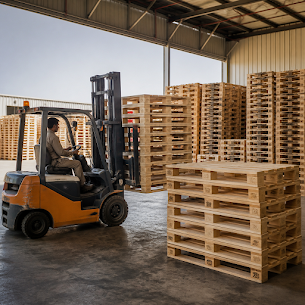
Even a strong pallet can be damaged through improper handling. Forklift operators should position the forks correctly and avoid striking pallet boards or supporting members.
Goods should also be stacked evenly and secured when necessary. Excessive overhang, uneven weight distribution, and unstable stacking can increase the likelihood of movement or damage.
Proper warehouse handling procedures can therefore be just as important as selecting high load capacity wooden pallets in the first place.
Common Mistakes When Choosing Heavy Duty Wooden Pallets
One common mistake is selecting a pallet based only on its advertised size or price. Two pallets with similar dimensions can have significantly different construction and load-handling characteristics.
Another mistake is ignoring how the pallet will be moved. A pallet intended for stationary storage may not be appropriate for repeated forklift transportation.
Businesses should also avoid assuming that every heavy product requires the same pallet. Product weight, dimensions, shape, center of gravity, and handling method should all be considered.
When Should You Choose Custom Industrial Wooden Pallets?
Custom pallets can be useful when standard dimensions do not adequately support a particular product. Oversized machinery, irregularly shaped equipment, and unusually heavy components may require a pallet designed around their dimensions and weight distribution.
A custom design can provide suitable support points while making loading and handling more practical. It can also help businesses optimize packaging and transportation requirements.
Before ordering custom pallets, provide accurate product dimensions and weight information so the pallet design can be matched to the intended application.
Why Choose Nejoum Al Lail Carpentry for Industrial Wooden Pallets?
For businesses looking for reliable pallet solutions in Dubai and across the UAE, choosing an experienced supplier can make the selection process easier. Nejoum Al Lail Carpentry provides wooden pallet solutions for different commercial and industrial requirements.
Whether a business needs standard pallets, high-load options, or pallets designed for specific products, discussing the intended application can help determine the appropriate construction and dimensions.
A clear understanding of the product weight, handling method, storage conditions, and transportation requirements allows the pallet to be selected according to its actual purpose.
Conclusion
Choosing the right industrial wooden pallets for heavy load capacity requires careful consideration of weight, dimensions, wood quality, construction, handling conditions, and load distribution. A pallet that works well for lightweight warehouse goods may not be suitable for heavy machinery or industrial materials.
Businesses in Dubai and across the UAE can improve their pallet selection process by clearly defining their load requirements and choosing pallet designs appropriate for storage, transportation, and repeated handling.
Whether you need industrial wooden pallets, high load capacity wooden pallets, or heavy duty industrial wooden pallets, selecting the right construction can help support safer and more efficient material handling.
FAQs About Industrial Wooden Pallets for Heavy Loads
What makes a wooden pallet suitable for heavy loads?
Wood quality, board thickness, supporting members, fasteners, dimensions, and overall construction all contribute to a pallet’s ability to handle heavy loads.
Are high load capacity wooden pallets suitable for warehouses?
Yes, they can be suitable for warehouses when their design and capacity match the goods, storage system, and handling equipment being used.
What is the difference between static and dynamic pallet capacity?
Static capacity refers to the load a pallet supports while stationary. Dynamic capacity concerns loads when the pallet is being lifted or moved.
When should I use heavy duty industrial wooden pallets?
Heavy duty pallets are appropriate when goods are significantly heavier or when pallets will experience demanding handling and repeated use.
Can wooden pallets be customized for heavy machinery?
Yes. Custom pallets can be designed around the dimensions, weight, and support requirements of machinery and other unusually shaped or heavy products.